Knowledge Center

Straight Answers About Roofing in Chicagoland

Guides and answers built around what this climate actually does to a roof — lake-effect snow, freeze-thaw cycles, and a different permit process in every municipality we work in.

Since 2005Family owned & operated
Lic. #104.020912Licensed, insured, bonded
Own CrewsNo rotating subcontractors
Permits HandledIn every municipality we serve
Browse

Answers by Topic

31 questions homeowners actually ask us, grouped the way they come up — vetting a contractor, understanding cost, and knowing what happens on the job.

Showing all 31 answers across 5 topics.

M Metal Roofing Specifics
Can metal roofing be installed over existing shingles in Chicagoland?
Technically it’s possible in limited cases, but it’s not a good idea for most homes here. Old shingles trap moisture against the deck, and our freeze-thaw cycle expands that moisture and stresses the panel attachment every winter. Castello Roofing performs full tear-off on every metal roof installation, so new panels always go down on a clean, inspected deck.
How long does metal roof installation take?
Most Chicagoland residential jobs take one to three days. Simple rooflines with few penetrations can be finished in a day. Complex rooflines with multiple dormers, chimneys, and penetrations take longer, and any significant decking repair discovered during tear-off adds time. We communicate any timeline changes before the installation date, not after.
How much does metal roof installation cost in Chicagoland?
Costs vary by panel type, roof size, and complexity — standing seam typically costs more per square foot than stone-coated or exposed-fastener systems, and both cost more than asphalt shingles. Permit fees and any decking repairs, which are documented with photos before we proceed, are additional. Castello Roofing provides free written estimates so you know the real number for your home before committing.
Does metal roofing need a permit in Chicagoland?
In most cases, yes — the city of Chicago and most surrounding suburbs require a permit for roofing replacement, though the exact process depends on the municipality. Castello Roofing handles the permit application for the specific town or city your home is in and includes the fee in the written estimate.
Why does underlayment matter so much on a Chicago metal roof?
Standard felt paper and asphalt-rated synthetic underlayment break down under the heat metal panels reach in summer and don’t hold up against the condensation that forms on cold metal panel undersides in winter. Castello Roofing installs underlayment rated specifically for metal roofing on every job, no matter where in Chicagoland the home is.
How does metal roofing hold up under heavy snow and ice off Lake Michigan?
Metal’s smooth, low-friction surface sheds snow far more readily than asphalt shingles, which reduces the standing snow load a roof structure has to carry through a Chicago winter. The bigger risk isn’t the panel itself — it’s ice damming at the eaves, which is why we run ice and water shield well past the exterior wall line on every job and make sure attic ventilation is balanced so the roof deck stays a consistent temperature. A properly installed metal roof handles our winters better than most other roofing materials, provided the underlayment and ventilation are done right underneath it.
Is a metal roof noisy when it rains or hails?
Not the way people expect. A metal roof installed over solid decking with proper underlayment and, in most cases, an attic space above the living area sounds very similar to an asphalt shingle roof from inside the home — the deck, insulation, and underlayment absorb the sound. The “tin roof in a rainstorm” idea mostly applies to open-framed structures like barns or porches with no solid decking underneath, which isn’t how we build residential roofs.
Which metal panel type is the best fit for a Chicagoland home?
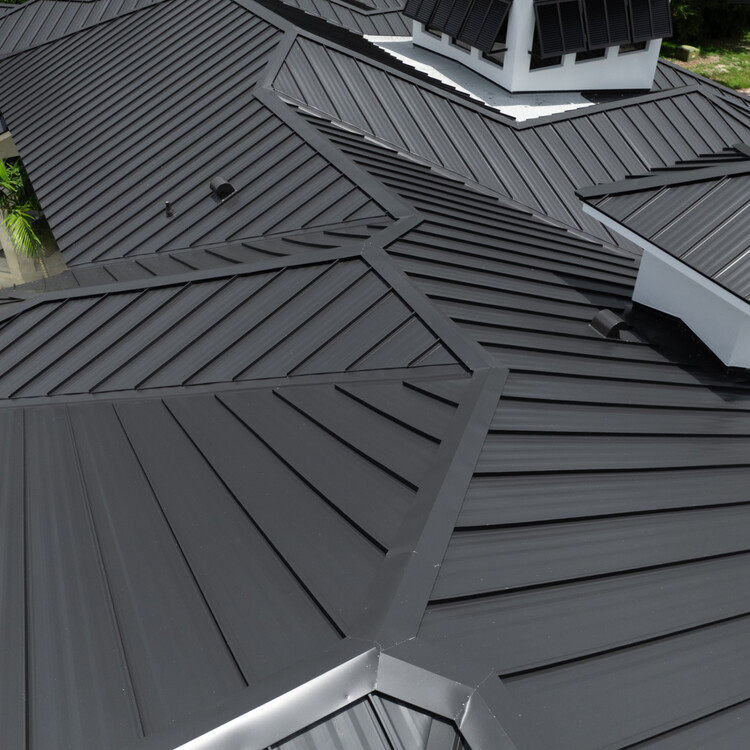
It depends on the look you want and the home itself. Standing seam is the most common choice for a clean, modern profile and the fewest long-term maintenance concerns, since there are no exposed fasteners. Stone-coated panels are a strong option when a homeowner wants the dimensional look of shingles or tile with metal’s durability — common on homes in historic districts or with strict aesthetic guidelines. Exposed-fastener corrugated panels tend to fit outbuildings, garages, and more utilitarian structures. We walk through the trade-offs for your specific roofline and budget during the estimate.
What kind of warranty comes with a Castello metal roof?
Metal roofing warranties typically stack two layers: a manufacturer’s warranty on the panel finish and material, and a workmanship warranty from the installing contractor covering the installation itself. Manufacturer coverage varies by product line, and workmanship coverage varies by contractor — which is exactly why the flashing photos and deck documentation we take on every job matter. Castello Roofing reviews both warranty layers with you in writing before the contract is signed, so there’s no ambiguity about what’s covered if an issue comes up later.
What maintenance does a metal roof actually need?
Far less than asphalt shingles, but not zero. We recommend a visual inspection once a year — checking flashing, sealant at penetrations, and clearing debris from valleys — plus a closer look after any major wind or hail event. Standing seam systems with concealed fasteners need essentially no fastener maintenance; exposed-fastener systems benefit from an occasional check that fasteners haven’t backed out or the washers haven’t degraded. Castello Roofing offers maintenance checks for customers who want a professional eye on the roof rather than doing it themselves.
Can metal roofing be installed on a home in a historic district or under HOA rules?
In most cases, yes, though it depends on the specific district or association guidelines. Many historic districts and HOAs in Chicagoland allow stone-coated metal panels because their profile reads as traditional shingle or tile from the street, while some restrict standing seam to certain building types or locations, like additions or garages. We’ve worked through approval processes in several North Shore and city historic districts and can help identify what’s likely to be approved before you invest time in the application.
1 Trust, Licensing & Credentials
Are you fully licensed and insured?
Yes. Castello Roofing & Waterproofing, Inc. is fully licensed (Lic. #104.020912) and carries general liability and workers’ compensation coverage on every crew member who steps onto a roof. That matters for you directly — if a contractor isn’t properly insured and a worker is hurt on your property, the liability can fall back on the homeowner. We provide certificates of insurance on request before any work begins.
What is your physical office address?
Castello Roofing operates out of Chicago’s Lincoln Park neighborhood — not a P.O. box, and not an out-of-town outfit that showed up after a storm. That distinction matters more than people realize: storm-chasing crews often canvas a neighborhood after hail or wind damage, sign contracts fast, and are unreachable months later when a warranty issue comes up. A real local address you can visit is one of the simplest ways to vet a roofer.
How long have you been in business in this local area?
Castello Roofing & Waterproofing has been family owned and operated since 2005, working continuously across the North Shore, the south and western suburbs, and the city of Chicago. Longevity is a meaningful signal in this trade — a company that’s been answering to the same neighborhoods for two decades has a reputation to protect that a here-today, gone-tomorrow crew doesn’t.
Can you provide local references or examples of recent projects?
Yes. We can point you to recent metal, shingle, and flat-roof projects around Chicagoland, along with references from homeowners in your general area who are willing to talk about their experience. Ask to see examples close to your own neighborhood or building type — a roofer’s portfolio should reflect the kind of homes and conditions you actually have.
What do your online reviews look like?
We’d encourage you to check Google, Yelp, and the Better Business Bureau directly rather than take any contractor’s word for it, including ours. Look past the star rating to how a company responds to negative reviews — a pattern of defensive or dismissive responses tells you more than the rating itself about how they’ll handle a problem on your job.
Are you certified by any major roofing manufacturers?
Manufacturer certifications matter because they typically unlock enhanced or extended product warranties that aren’t available through uncertified installers, and they mean the crew has been trained specifically on that manufacturer’s installation specs. Castello Roofing works with certified product lines across metal, shingle, and flat-roofing systems — ask us for the specific certifications that apply to your project during your estimate, since coverage can vary by product.
Do you use your own crew or hire subcontractors?
Castello Roofing uses our own trained crews rather than rotating subcontractors on residential jobs. That consistency is part of how we maintain quality control from one job to the next — the same installation standards, the same familiarity with manufacturer specs, and one company accountable for the work from tear-off to final inspection.
2 Cost, Estimates & Financing
Can you provide a detailed, written estimate?
Yes, always. A proper estimate breaks out labor, materials, disposal and dumpster fees, permit costs, and clearly flags potential extra costs like rotted decking that isn’t visible until tear-off. If a contractor’s estimate is a single lump-sum number with no breakdown, that’s worth asking about before you sign.
How much does a roof replacement or repair typically cost?
It depends heavily on roof size, pitch, material, and what the tear-off reveals underneath. Metal roofing generally costs more upfront than asphalt shingles but less over the life of the roof given the lifespan difference. Repairs vary based on the extent of damage and whether it’s isolated or a sign of a larger issue. Castello Roofing provides free written estimates so you’re working from real numbers for your specific home, not a general range.
Do you offer financing options?
Castello Roofing offers financing options for qualified homeowners to help spread out the cost of a larger project like a full roof replacement. Ask your estimator about current plans and terms — financing details and eligibility can change, so we’ll walk through what’s available at the time of your consultation.
Will you help me manage my home insurance claim?
Yes. After hail, wind, or storm damage, we help document the damage with photos and a detailed inspection report that supports your claim, and we can work directly with your adjuster to make sure the scope of approved repairs actually matches what the roof needs. This is especially important after severe weather events, when insurance companies see a high volume of claims and thorough documentation makes a real difference.
What is your payment schedule?
We’re upfront about deposit requirements before work begins, and homeowners should never pay the full contract balance until the job is complete and they’ve had a chance to walk the finished roof. A payment schedule tied to project milestones, with the final payment due only after completion and your sign-off, protects you if something goes wrong partway through.
3 Warranties
What kind of workmanship warranty do you offer?
A workmanship warranty covers the labor and installation itself — separate from the manufacturer’s warranty on the materials — and it’s what protects you if a leak or failure traces back to how the roof was installed rather than a defect in the panels or shingles. Castello Roofing backs every installation with a written workmanship warranty; ask your estimator for the exact term of coverage on your specific project, since it can vary by scope of work.
What does the manufacturer’s material warranty cover, and for how long?
Manufacturer warranties cover defects in the material itself — panel finish, coating failure, or premature wear — and terms vary widely by product line and manufacturer, from a couple of decades to lifetime coverage on some standing seam systems. We review the specific manufacturer warranty that applies to your chosen product before you sign, including what can void it (like improper ventilation) so there are no surprises later.
4 Project Logistics & Property Protection
How long will the roofing project take?
Most residential metal roofing jobs run one to three days once work begins, though total project timeline also depends on permit approval, material lead times, and weather. Larger or more complex roofs, or jobs that uncover significant decking repair during tear-off, take longer. We give you a realistic timeline upfront and communicate immediately if anything changes.
How will you protect my landscaping, driveway, and gutters during the project?
We use tarps and plywood to protect landscaping and delicate areas below the work zone, position dumpsters and material staging to keep driveways and walkways clear, and take care around existing gutters during tear-off and installation so they aren’t bent or damaged by falling debris. We walk the property with you before work starts to flag anything that needs extra protection.
What is your cleanup process?
We run magnetic sweepers across the yard, driveway, and any areas where debris could have landed to catch stray nails and metal fragments — this matters especially for pets, bare feet, and bike and car tires. Old roofing material and debris are hauled off in a dumpster staged for the job, and we do a final walkthrough with the homeowner before we consider the site clean.
Will you be pulling the necessary building permits?
Yes. Castello Roofing handles the permit application for every roofing job we do, in whichever Chicagoland municipality the home is located, and we build the fee into the written estimate up front — you shouldn’t have to chase this down yourself, and a contractor who suggests skipping it is a red flag.
Who will be my on-site project manager or main point of contact?
You’re assigned a dedicated point of contact for your project who you can reach with questions throughout the job, rather than being passed between whoever picks up the phone. That person is familiar with your specific scope of work, timeline, and any issues that come up during tear-off.
What happens if it rains unexpectedly while my roof is open?
We monitor weather closely before and during every job and won’t open a roof section we can’t close or properly tarp before conditions turn. If weather moves in faster than forecast, exposed sections get tarped and sealed at the edges to keep water out until work can safely resume. Protecting the interior of your home from water intrusion during an active project is a basic expectation, not an extra.
Nothing matches that yet. Try a different word, or call us at 312-646-2102 and we’ll answer it directly.
Before You Sign

What to Ask Any Roofing Contractor

Four questions that separate a crew trained on the system they’re selling from one assuming it installs like asphalt shingles.

What manufacturer training or certification do your installers have on this panel system?

A vague answer, or a name you can’t verify, is a red flag.

What underlayment do you use under metal, specifically?

The right answer names a product rated for metal roofing — not standard felt or asphalt-rated synthetic.

How do you handle thermal expansion at the ridge and along seams?

A contractor who can’t explain this in specific terms hasn’t installed enough metal roofing in this climate to understand what our temperature swings do to a panel system over time.

Do you pull permits, and in which municipality will this job be inspected?

Castello Roofing answers every one of these with documentation before any contract is signed, whether the job is in the city, the North Shore, or the south or west suburbs.

Where We Work

Serving All of Chicagoland

North Shore
South Suburbs
Western Suburbs
City of Chicago

Still Have a Question We Haven’t Answered?

Get a free written estimate — we’ll evaluate your roofline, ventilation, and local code requirements before you sign anything.

Contact Call Text Email